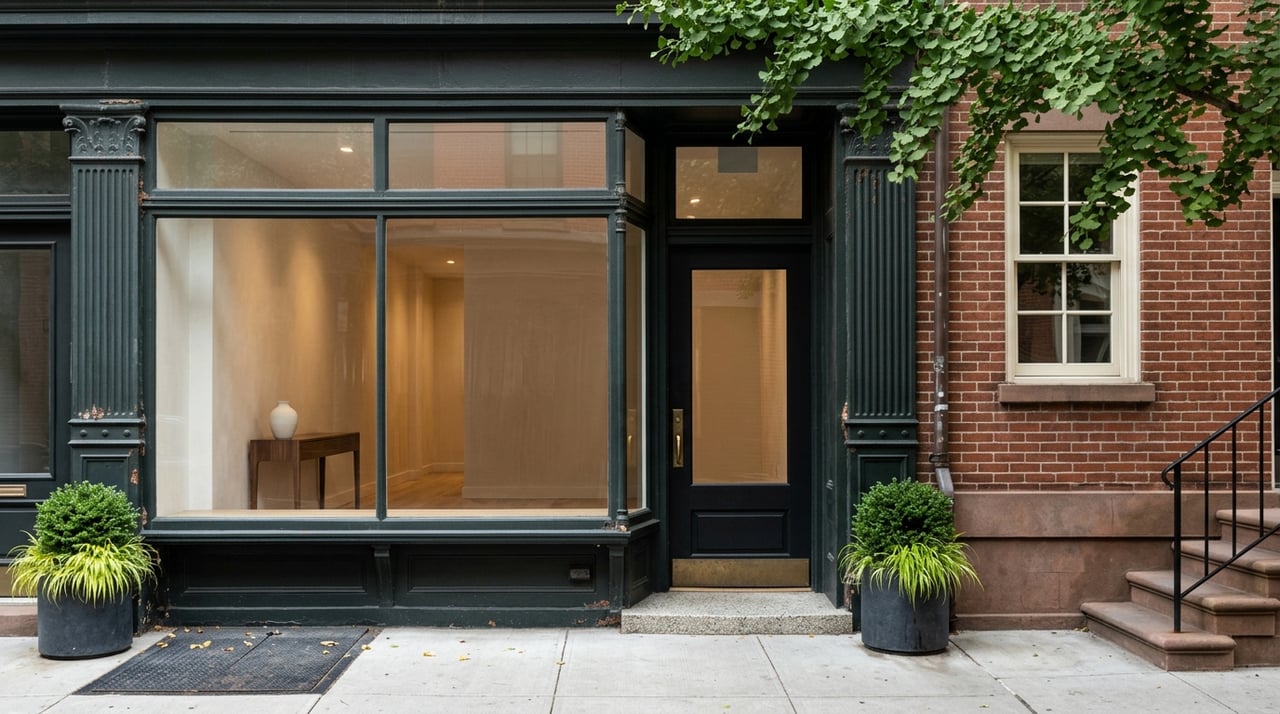
Ever wonder why the West Village feels so different from almost anywhere else in Manhattan? Part of the answer is in the streets themselves. Instead of a strict grid, you get irregular angles, intimate corners, and blocks that unfold with a sense of surprise. If you love design, architecture, and the small details that give a neighborhood its soul, this walking tour will help you see the West Village with fresh eyes. Let’s dive in.
Why the West Village Feels So Distinct
The West Village tells its story through form, texture, and scale. Its older street pattern reflects Dutch-settlement planning rather than Manhattan’s later grid, which helps create the neighborhood’s famously varied and human-scaled feel.
That physical character is also protected in meaningful ways. The Greenwich Village Historic District was designated in 1969 and remains New York City’s largest historic district, with more than 2,000 buildings across more than 65 blocks. For anyone interested in homes, streetscapes, or preservation, that context matters because it helps explain why so much visual texture still survives here.
Just as important, the West Village is not one-note. Across the neighborhood and especially in the Far West Village, you will find 19th-century row houses, converted loft buildings, walk-up apartments, artist live-work spaces, and newer residential buildings existing side by side.
Start in Abingdon Square
A good design walk begins in a place that shows how public space shapes neighborhood life. Abingdon Square gives you that right away, with a compact footprint and a setting that feels tied to the rhythm of the surrounding streets.
If you visit on a Saturday, the year-round Abingdon Square Greenmarket adds another layer to the experience. It has connected local farms to the Greenwich Village neighborhood since 1994, and the market activity makes the square feel especially vivid and grounded in everyday city life.
As you begin walking, notice the relationship between open space and building edges. In the West Village, even small squares can make the surrounding blocks feel softer, more social, and more visually dynamic.
Read the Streetscape Like a Designer
Before heading to the next stop, slow down and look closely at the design vocabulary around you. The West Village rewards attention to details that are easy to miss when you are rushing.
Look for elements like:
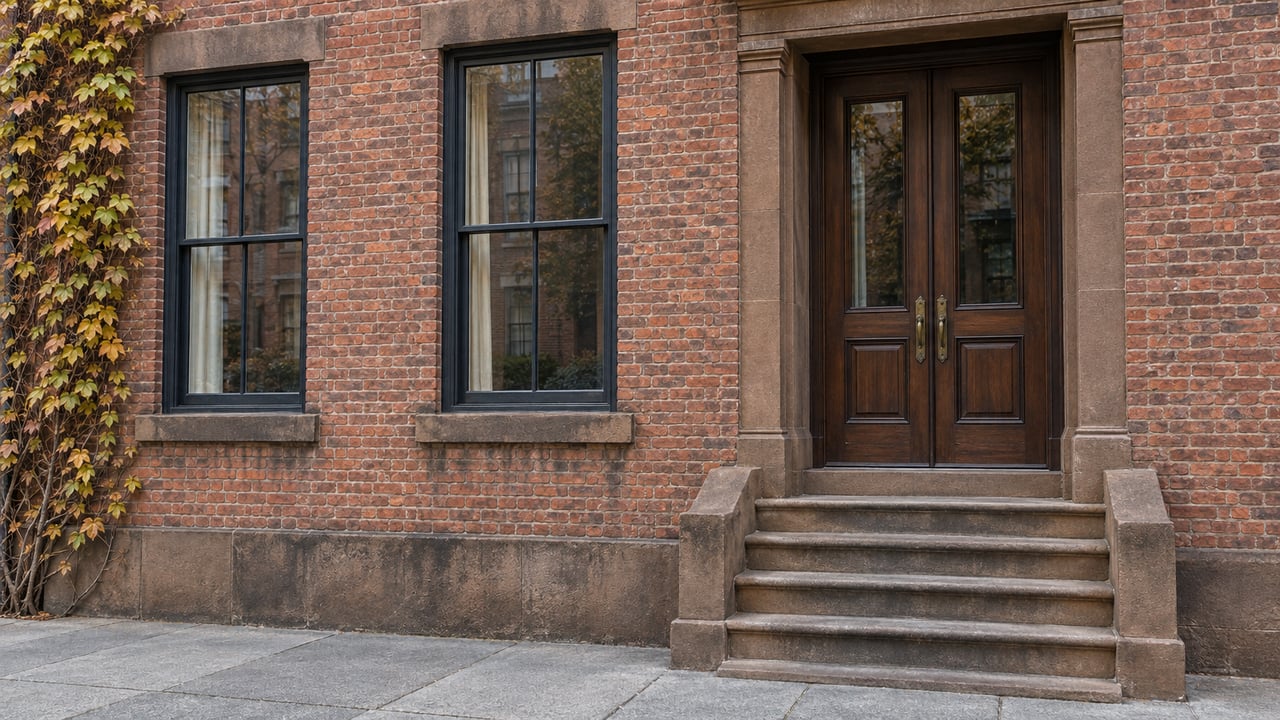
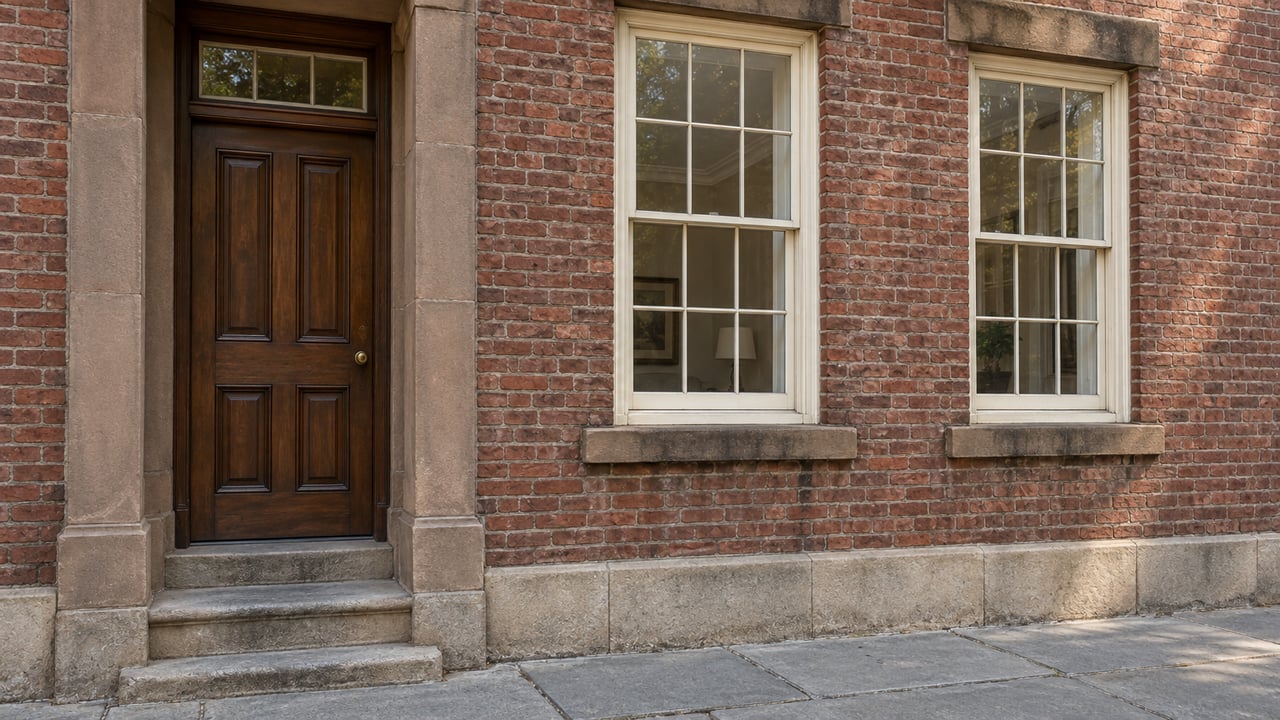
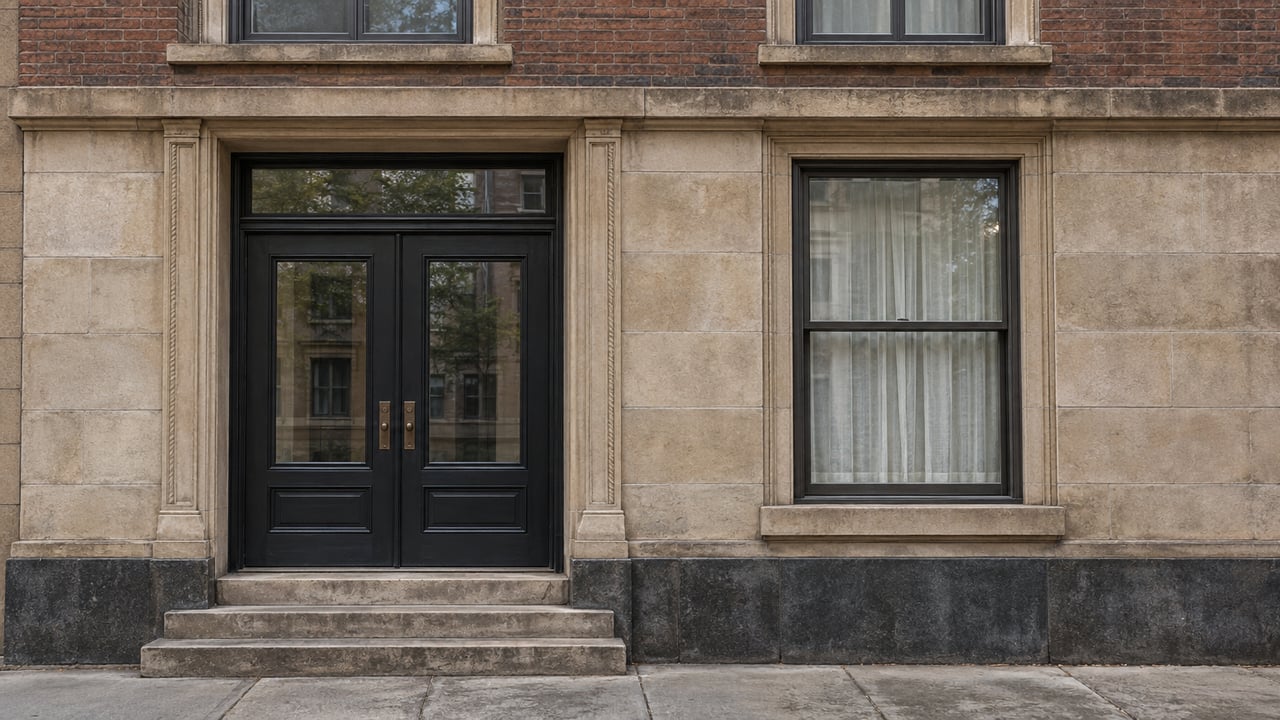
- Brick facades with visible age and variation
- Ironwork on gates, railings, and fences
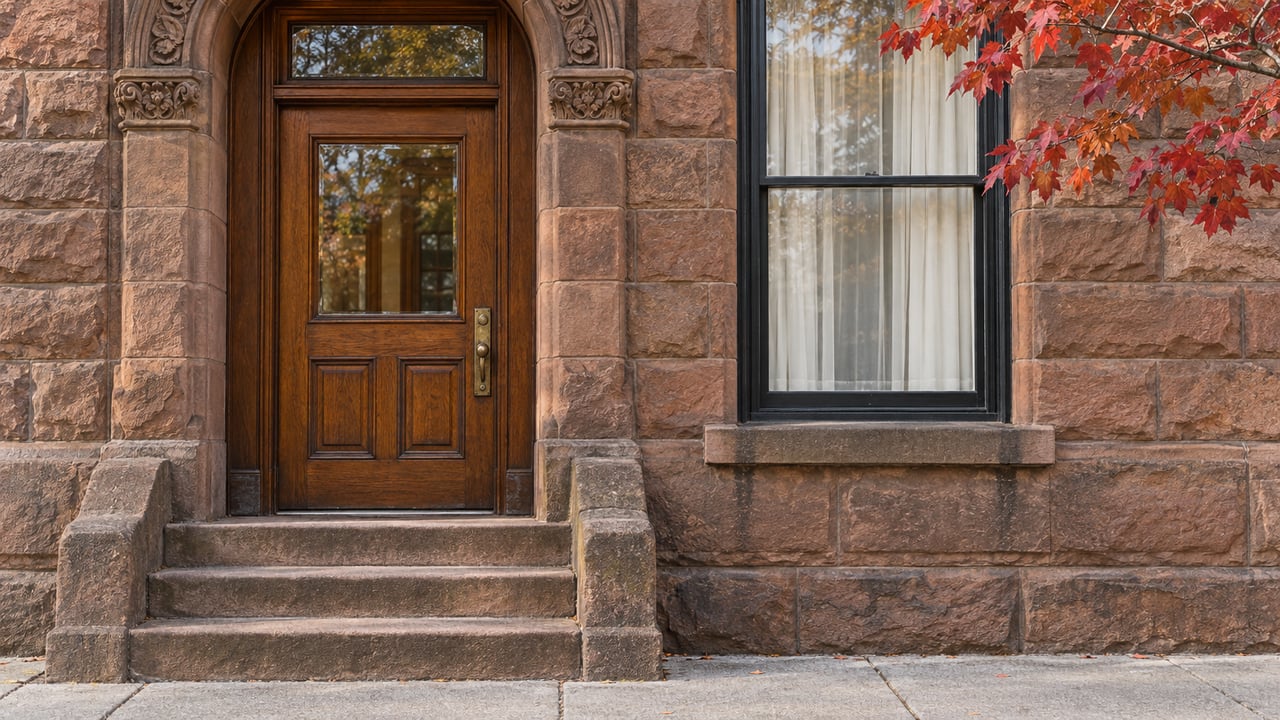
- Stoops that create a gradual transition from street to home
- Shallow setbacks that keep buildings connected to the sidewalk
- Consistent street walls that make blocks feel enclosed and calm
- Pocket-scale courts and side passages tucked behind busier streets
These features help explain why the neighborhood feels layered rather than oversized. The beauty here often comes less from a single landmark and more from how ordinary materials are assembled across an entire block.
Pause at Father Demo Square
Next, make your way to Father Demo Square at Sixth Avenue, Carmine Street, and Bleecker Street. This triangular plaza was created after the Sixth Avenue extension and was named in 1941 for Father Antonio Demo, the longtime priest at Our Lady of Pompei.
The shape of the square matters as much as its history. It is a strong example of how irregular infrastructure and angled intersections can produce memorable urban moments. The church bell tower rising over the square adds a vertical focal point, giving this pocket plaza a clear sense of place.
For a design lover, this is a great stop to study contrast. You have traffic movement, converging streets, open sky, and historic architecture all compressed into one small urban scene.
Find Quiet Detail at Grove Court
From there, head toward Grove Court, set off Grove Street between Bedford and Hudson Streets. Entered through an iron gate, it feels less like a typical city block and more like a hidden brick-lined enclave.
The six connected Federal houses at the rear were built in 1854, and the space still reads as a cohesive interior court. This is one of the best places in the neighborhood to appreciate how scale shapes emotion. The enclosure, repetition of materials, and sense of separation from the street create a calm, almost private atmosphere.
This stop also highlights one of the West Village’s defining strengths: intimacy. Not every memorable residential setting has to be grand. Sometimes the most compelling design comes from restraint, proportion, and texture.
Spot 75 1/2 Bedford Street
Nearby, take a moment to find 75 1/2 Bedford Street. Dating to 1873 and measuring just 9.5 feet wide, it is often cited as the narrowest house in Greenwich Village.
What makes it memorable is not only its size, but what that size says about the neighborhood’s built fabric. The West Village often feels custom-shaped rather than standardized, and this house is a perfect example of how unusual lot conditions can lead to lasting architectural character.
Walk Through Christopher Street
Christopher Street is one of the Village’s oldest streets, and it offers a compact lesson in architectural variety. As you walk, you can see a range of brick-building styles, including Art Deco and Tudor-style influences, layered into one corridor.
This is a useful reminder that the West Village is not preserved as a single moment in time. Its appeal comes from accumulation. Different eras, scales, and uses all remain visible, which gives the neighborhood depth and keeps each block visually interesting.
Pay attention to the shift between quieter side streets and busier mixed-use stretches. That contrast is part of what makes the neighborhood feel alive without losing its residential character.
Stop at Christopher Park
Across from the Stonewall Inn, Christopher Park adds both historical and spatial importance to the walk. It is part of the Stonewall National Monument landscape and includes brick sidewalks, a 19th-century wrought-iron fence, benches, and George Segal’s Gay Liberation sculpture.
Design-wise, it is another example of how small plazas can anchor a street. The fencing, paving, seating, and sculpture create structure without overwhelming the space. It feels intimate, legible, and connected to the life around it.
Head West for a Different Design Language
As you move into the Far West Village, the architectural story begins to widen. This area was once more industrial and waterfront-oriented, and today it is predominantly residential while still retaining visible traces of that earlier history.
According to the Department of City Planning, 78% of lots here are developed for residential use and 13% for commercial use. You will still see remnants of maritime and industrial history in loft buildings and smaller-scale hotels, but the overall mix now includes row houses, apartment buildings, West Village Houses, and newer residential development.
This shift is what makes the Far West Village so compelling. You are no longer reading just one kind of neighborhood fabric. You are reading adaptation.
Explore Westbeth
Westbeth is one of the most important design stops on this route. Conceived in the 1960s as one of the first U.S. examples of adaptive reuse of industrial buildings for artistic and residential use, it opened in 1970 with 383 live-work spaces for artists and their families.
Today, it still includes studios, commercial spaces, and areas for performance and rehearsal. From a real estate and design perspective, Westbeth shows how older industrial structures can be reimagined rather than erased. It is a powerful example of how neighborhood character can evolve through reuse.
When you walk here, look at massing, window rhythms, and the scale of the complex compared with the finer-grained residential streets nearby. The difference is striking, yet it still feels like part of the larger West Village story.
Notice Jane Jacobs at West Village Houses
If you are drawn to thoughtful urban design, West Village Houses deserves special attention. Village Preservation notes that these 42 walk-up buildings were the only buildings anywhere that Jane Jacobs had a direct hand in designing.
The project was conceived as modest, human-scaled infill, using brown brick, shallow setbacks, and shared yards. Those choices matter because they show how new residential development can fit into an existing neighborhood without copying it exactly or overpowering it.
For buyers who care about context, this is an especially meaningful stop. It reflects a design philosophy centered on livability, shared space, and the everyday experience of the street.
End at Weehawken Street
Finish the tour at the Weehawken Street Historic District, a 14-building waterfront enclave spanning 1830 to 1938. The district includes a Federal rowhouse, a rare Hudson River waterfront hotel, a stables building, and surviving market-house fabric.
This is where the Far West Village’s layered identity becomes especially clear. You can see pieces of residential, commercial, and waterfront history held together within a small footprint. It is a reminder that the neighborhood’s appeal comes not from uniformity, but from coexistence.
The surrounding area also helps illustrate how scale shifts near the water. The Department of City Planning notes lower-scale clusters along Christopher and Weehawken streets and Charles Lane, with taller buildings concentrated along West Street.
What This Walk Reveals About West Village Homes
For anyone thinking about buying or selling in the West Village, this walk offers more than visual pleasure. It shows why homes here can appeal to people in very different ways.
Some buyers are drawn to row houses, stoops, and historic detail. Others respond to loft-style conversions, artist live-work history, or the clean urban logic of human-scaled infill. In the West Village, housing diversity is part of the value story.
The commercial fabric matters too. The West Village BID covers Bleecker Street, Christopher Street, West 4th Street, 7th Avenue South, and the west side of Avenue of the Americas, along with intersecting smaller commercial and mixed-use streets. About 90% of the district’s commercial square footage is mixed-use with ground-floor commercial and upper-floor residential, and roughly 45% is food and drink related.
That mix helps support the neighborhood experience people often come here seeking. It creates active corridors while still allowing quieter residential pockets to hold their own.
Why Design Lovers Keep Coming Back
The West Village does not ask you to admire it from a distance. It asks you to notice how a gate changes a threshold, how brick catches light, how a plaza opens at the exact right moment, or how one block shifts from row houses to lofts without losing coherence.
That is what makes it so enduring. The neighborhood offers design not as spectacle, but as lived experience. If you are looking for a home here, or preparing to bring one to market, understanding that texture can help you see value more clearly.
If you are exploring a move in the West Village or thinking about how to position a home in this design-rich market, The Jane Advisory brings a thoughtful, neighborhood-first perspective to buyer and seller representation.
FAQs
What makes West Village streets feel different from the rest of Manhattan?
- The West Village has an older street pattern with irregular angles rather than Manhattan’s standard grid, which creates more varied views, intimate corners, and a distinctive sense of scale.
What should design lovers notice on a West Village walking tour?
- Focus on brick facades, iron gates and railings, stoops, shallow setbacks, street walls, pocket parks, and the contrast between small side streets and busier mixed-use corridors.
Why is the Greenwich Village Historic District important in the West Village?
- Designated in 1969, the district is one of the city’s earliest and largest historic districts, with more than 2,000 buildings across more than 65 blocks, helping preserve the neighborhood’s architectural character.
What is special about Grove Court in the West Village?
- Grove Court is a gated, brick-lined enclave off Grove Street with six connected Federal houses built in 1854, offering one of the neighborhood’s most intimate and tucked-away residential settings.
How does the Far West Village differ from the core West Village?
- The Far West Village reflects more of the area’s industrial and waterfront history, with a mix that includes converted lofts, row houses, apartment buildings, West Village Houses, and some newer taller residential buildings.
Why does Westbeth matter in West Village design history?
- Westbeth is an early and influential example of adaptive reuse in the United States, transforming industrial buildings into artist live-work housing with studios, commercial spaces, and performance areas.
What does West Village housing look like today?
- The housing mix includes townhouses, walk-up apartment buildings, prewar apartment houses, artist live-work housing, converted lofts, and a limited number of newer residential buildings.
How can a walking tour help you understand West Village real estate?
- A walking tour helps you see how architecture, scale, public space, and mixed-use streets shape the feel of each block, which can be useful when evaluating neighborhood fit, home appeal, and market positioning.